


PPF vs Ceramic Coating in Miami: Which Do You Need, or Both?
Paint protection film and ceramic coating are the two most requested upgrades at our Miami studio, and they solve different problems. Paint protection film (PPF) is a thick, self-healing urethane layer that physically stops rock chips and scratches. Ceramic coating is a liquid polymer that bonds to your paint for deep gloss, UV resistance and much easier washing. One protects against impact, the other against the environment, which is why so many Miami drivers end up with both.
If you commute on I-95 or the Palmetto, your front end takes a steady beating from road debris. If your car sits outside anywhere in South Florida, the year-round sun, hard water and lovebug season attack the paint every day. The right choice depends on which of those problems matters more for your vehicle.
What Paint Protection Film Actually Does
Paint protection film is a clear urethane film, usually 8 mils thick, that is applied over your paint to absorb physical damage before it reaches the finish. When a piece of gravel kicks up on the Dolphin Expressway, the film takes the hit instead of your bumper.
Modern films like the LLumar film we install carry a self-healing top layer. Light scratches and swirl marks in the film disappear with heat, whether that is Miami sunshine or warm water. The film is virtually invisible and comes in gloss or matte finishes, so it protects without changing how the car looks.
PPF makes the most sense on the panels that take impacts: front bumper, hood, fenders, mirrors, headlights, rocker panels and rear impact zones. It is the only product that physically stops a rock chip.
What Ceramic Coating Actually Does
Ceramic coating is a liquid polymer that chemically bonds with your factory paint and cures into a hard, slick layer. It does not stop rock chips. What it does instead is protect against everything Miami’s climate throws at paint: UV rays that fade and oxidize, hard water spots, bird droppings, tree sap, and the acidic lovebug splatter that etches unprotected clear coat every spring and fall.
The hydrophobic surface is the part owners notice daily. Water beads and sheets off, dirt has a harder time sticking, and washing the car gets faster and safer because you are grinding less grit into the finish. The gloss boost is real too, especially on darker colors.
We install Modesta and Nanolex coating systems, applied over properly corrected paint so the finish is locked in swirl-free.
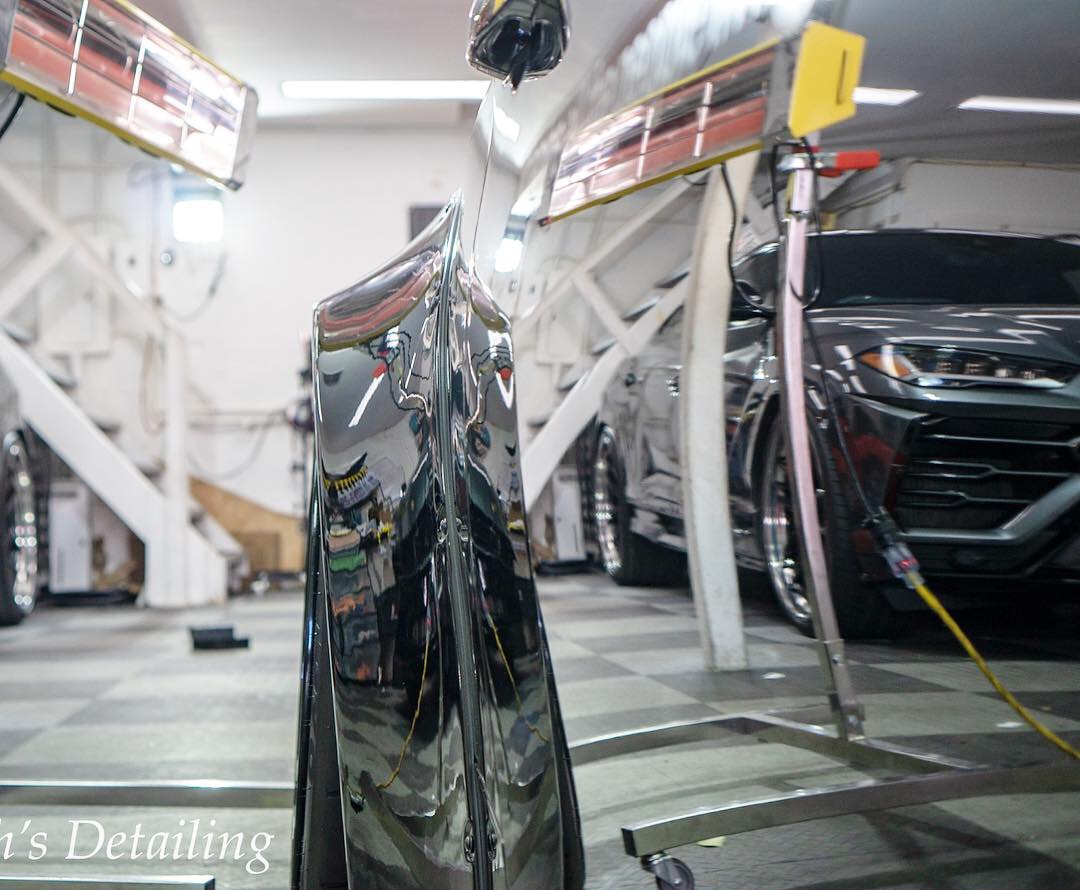
PPF vs Ceramic Coating: The Key Differences
- Stops rock chips and scratches: Paint Protection Film: Yes, physical barrier. Ceramic Coating: No, light swirl resistance only.
- UV and oxidation protection: Paint Protection Film: On covered panels. Ceramic Coating: Yes, everywhere it is applied.
- Hydrophobic, easy washing: Paint Protection Film: Mild. Ceramic Coating: Strong.
- Gloss enhancement: Paint Protection Film: Neutral. Ceramic Coating: Noticeable.
- Self-healing from light scratches: Paint Protection Film: Yes, with heat. Ceramic Coating: No.
- Typical lifespan: Paint Protection Film: 5 to 10 years. Ceramic Coating: Several years with proper care.
- Best for: Paint Protection Film: Highways, daily drivers, new cars. Ceramic Coating: Garage-kept cars, gloss lovers, easy maintenance.
Which One Makes Sense for Your Car in Miami
Daily driver on Miami highways. Start with PPF on the full front end. Rock chips are the most expensive paint damage we see, and no coating can prevent them. We see the same highway chip damage on cars coming in from Coral Gables, Kendall and Palmetto Bay every week.
Garage-kept weekend car. Ceramic coating is usually the better first move. You get the gloss, the UV defense and the easy washing, and your chip exposure is lower.
Tesla or other EV. PPF, without much debate. We protect a lot of Teslas at our studio, including a full-body installation on a Model X, because EV owners tend to drive them daily and care about keeping the finish perfect.
Matte or satin finish. PPF made for matte finishes protects without adding gloss. Ceramic coating on matte paint needs the right product choice, so ask us before deciding.
Why Many Miami Owners Get Both
The most complete protection stacks the two: PPF on the high-impact zones, ceramic coating over the entire car, including on top of the film. The film handles the physics, the coating handles the chemistry, and the whole car gets the gloss and easy maintenance.
Coating over PPF is safe and common. The coating bonds to the film’s top layer just like it does to clear coat, adding UV resistance to the film itself and keeping it cleaner between washes.

What Each Option Costs in Miami
PPF pricing depends on how much of the car you cover. Across the Miami market, a full front end typically runs $1,800 to $3,000, with full body coverage going well beyond that. Our PPF cost guide for Miami breaks down every coverage level in detail.
Ceramic coating usually costs less than a full PPF installation, with the final price depending on vehicle size, paint condition and how much correction the paint needs first. Many owners stage the work: film on the front end now, coating for the whole car, and more film coverage later as budget allows.
Every quote from our studio starts with a look at your actual vehicle, because paint condition and coverage goals change the number more than any menu price.
Common Questions About PPF vs Ceramic Coating
Is PPF or ceramic coating better for Miami’s sun?
Ceramic coating is the stronger UV defense because it covers every painted panel. PPF only protects the panels it covers, though it does block UV there too. For sun exposure alone, coating wins; for impact damage, only film works.
Can I put ceramic coating on top of PPF?
Yes. Coating bonds to the film’s top layer and adds UV resistance and hydrophobic behavior to the film itself. It is the standard way we finish a combined installation.
How long does each last in South Florida?
Quality PPF typically lasts 5 to 10 years with proper care. Ceramic coatings last several years depending on the product line and how the car is washed. Miami’s sun is hard on both, which is why product quality and prep matter here.
Which is better for a Tesla or EV in Miami?
PPF first. Teslas are daily drivers more often than not, and their owners tend to notice every chip. We have protected everything from a Model 3 Performance full front to a full-body Model X.
Do I need paint correction before PPF or coating?
Usually some level of it, yes. Coating locks in whatever the paint looks like on install day, and film looks best over clean, defect-free paint. Even new cars often need light prep from transport and dealership washing.
What does Hugh’s Detailing recommend if I can only pick one?
For most Miami daily drivers, PPF on the full front end first, because rock chips are permanent and coating cannot stop them. If the car rarely sees highways, ceramic coating gives you more daily enjoyment per dollar. Call 786-554-7508 and we will give you a straight answer for your specific car.
Film, Coating, or Both? We Will Tell You Straight
Bring the car by our Miami studio or send us the year, make and model. We will inspect the paint, ask how you drive, and recommend the protection that actually fits, with exact pricing for your vehicle.


